
"Of all possessions, a friend is the most precious."

- Heradotus

Are all calico cats female? Are all tortoiseshell cats girls? You’ve probably heard before that they are. It’s an interesting example of how genetics dictate some pretty predictable results. Or do they? After all, it certainly wouldn’t be the first time something resembling an old wives tale is taken as fact with few questions asked and shoulders shrugged in reply.
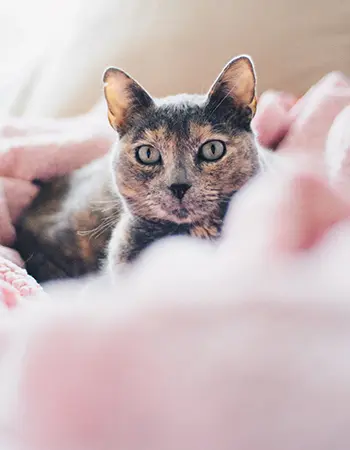
Dilute tortoiseshell female cat rests in a pink blanket.The actual, scientific fact of the matter is that most calicos and torties are female. There are some rare exceptions! According to a study by the University of Minnesota College of Veterinary Medicine, only about 1 in 3,000 calico cats are male!

It’s All About Chromosomes

Orange coloring in cats comes from a gene in X chromosomes. High school biology refresher: females have XX chromosomes. Males have XY chromosomes. So, it stands to reason that either a male or female cat can be or have orange coloring. The girls, though, are commonly calico, tortie, or orange tabby whereas the vast majority of males are only orange tabby. (This has led to the misconception that only male cats are orange tabbies; actually, most are simply because girls have more chance to be other variations with orange.) This is because only a cat with XX chromosomes can be calico or tortie.

So How is There Ever a Male Calico or Tortoiseshell Cat?

It’s a genetic anomaly! Rarely, a cat—or even a person—has three chromosomes. So a male with XXY has the two required X’s to possibly make him a rare and beautiful kitty indeed. These XXY guys are called Klinefelter males, after endocrinologist Harry Klinefelter who first identified the condition in the 1940s.
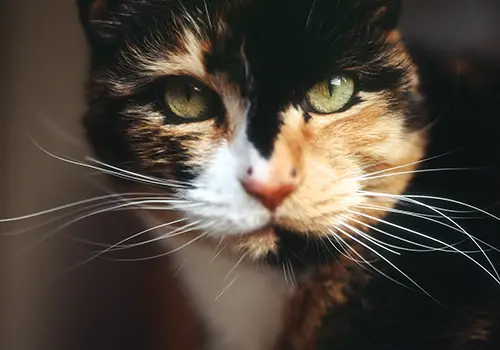
Calico cat contemplates her X chromosomes.

Calico cat contemplates her X chromosomes.

Now, don’t think that just because it’s possible to get a rare coloring in a male cat that you might be able to breed for this trait. The vast majority of cats with three chromosomes are sterile. That’s part of why it’s so rare to begin with. So if you have one, just cherish him for the rare multi-colored, autumn-kissed jewel that he is!

Some Kibble for Thought

Being sterile also means that many people assume that these male cats don’t need to be neutered. For their own health (and sometimes for your olfactory-related sanity), they should be neutered. They still behave like any other unneutered cat. They are more likely to spray urine to mark territory, roam far and wide looking for girls and fighting other males which often result in injury or severe disease, and they are far more likely to develop testicular tumors.

Do you have a male calico or tortoiseshell? We’d love to meet him!

A basket of calico and orange tabby kittens learning about their X chromosomes.

Ah, sweet vindication. All those cumulative hours spent watching cat videos are good for you! Now that the cat’s out of the bag, we can all feel justified.

Video of cat and french bulldog to help you procrastinate productively.Procrastination? Not a problem!

Texting your mom? Nope, just watching cat videos.

Too much screen time? Please. It’s strengthening the human-animal bond. No such thing as too much.

Okay, so according to a study, this favorite pastime might say more about humans than about the charms of cats. Interestingly, this is based on research done in 2015. We know that internet use is up every year to a point where 95% of North Americans now use the internet. Youtube alone has 1 billion mobile video views per day worldwide. We can’t help but wonder how many of those are cat videos.

How are Cat Videos Good for You?

It is well-documented that spending time with animals can improve our moods, sense of well-being, and even lower blood pressure. This study, by Jessica Myrick of Indiana University Media School, explored whether we might also benefit from time spent with animals via the internet given our obvious propensity for feline content online. Based on a strategic survey of 7,000 people and published in the peer-reviewed Computers in Human Behavior journal, it sought to identify links between personalities, behavior, and the consumption of cat videos. The data revealed some positive news for people.

Despite some feelings of guilt associated with using cat videos to procrastinate more important tasks, there was also evidence that the benefits outweighed that. “Even if they are watching cat videos on YouTube to procrastinate or while they should be working, the emotional pay-off may actually help people take on tough tasks afterwards,” Myrick said.


Watching cat videos might improve your productivity after you’re done procrastinating.


After watching cat videos, study participants reported:

  • Feeling more positive and energetic
  • Reduced anxiety
  • Reduced annoyance
  • Watching cat videos during work or study time


While we would never suggest that watching cats from afar replaces the benefits of having one or three cats of your own, we love seeing the ways in which our relationships with them can be mutually beneficial. They bring us genuine smiles and stress-relief daily, and all we need to do in return is stir the food that is already in their bowl to show them we care. (If you’re a cat owner, you know what we’re talking about.)

Are you a cat video lover?


As summer draws to a close, and autumn begins, we all get excited about the promise of cooler weather and more comfortable time spent outdoors. Late summer and fall allergies can weigh down the experience for you, though. But are dogs allergic to ragweed and other common allergens? Yes, they can be.

Often we see dogs allergic to ragweed and other seasonal allergens just like people!Just like with humans, some pets suffer from seasonal allergies. ‘Tis the season for many outdoor allergens ranging from pollens to molds, but ragweed pollen is one of the most well-known. Typically, it begins to affect dogs allergic to ragweed in August and continues to do so until autumn’s first frost. So we’re in the midst of it with several weeks left to go.

If your pampered pup has been out of dermatological sorts recently, seasonal allergies might be to blame.

What is Ragweed?

Common ragweed (Ambrosia artemisiifolia) is native to the United States. In fact, it thrives in every state except Alaska. It’s rather nondescript and doesn’t have brightly-colored flowers, so identifying it isn’t the easiest at first. It’s an annual that is often confused with goldenrod, which is not a major itch or sneeze inducing plant. Ragweed can grow to 1-3 feet tall and has shallow roots that make it easy to pull up the entire plant—the best eradication method if you have some growing on your property. It thrives in soft or disturbed soil, so it’s common along roadsides, and the pollen is so small and light that it travels through the air easily.

Ragweed is often confused with goldenrod when being blamed for dog allergies.There are a number of handy resources on the internet that you can use to get a pollen forecast for a given day. Pollen.com has a good one.

What Are the Symptoms in Dogs Allergic to Ragweed?

At their core, allergies are immune system over-reactions. Often, they are genetic. Unlike humans, dogs and cats primarily experience allergy symptoms in the form of skin problems, though we do still see runny eyes and sneezy noses in them, too. Let’s look at a list of symptoms:

  • Scratching or biting at the skin
  • Chewing or licking paws
  • Inflamed or infected skin (including ears, between pads of feet or parts of the body)
  • Itchy ears
  • Smelly ears
  • Hair loss
  • Scooting or licking anal region
  • Runny eyes
  • Sneezing

If your dog is experiencing any of these symptoms, it’s important to work with your vet to manage them. Prolonged infections and inflammation are unhealthy—even potentially dangerous—as well as uncomfortable or painful.

Allergy Management

Managing ragweed-induced symptoms is something your vet can help you with following a proper diagnosis. Species-appropriate antihistamines and anti-inflammatories are commonly prescribed to dogs. Do not medicate your dog at home without seeing a vet first. Many of the medicines we have at home for humans are not safe for dogs, and when they are, dosages can be quite different. Often, ear or skin infections are present, so antibiotics might be needed. Ear infections can be especially painful, so medications to promptly resolve them are important.

Special dog shampoos can help to calm inflamed skin and also wash off pollen that might be in your dog’s coat after a romp in the park. It can also be helpful to wash your dog’s bedding more often during allergy season to remove pollen that your pup tracks onto it.


Is your dog allergic to ragweed or other seasonal allergens? Let us help you get to the root of the problem!


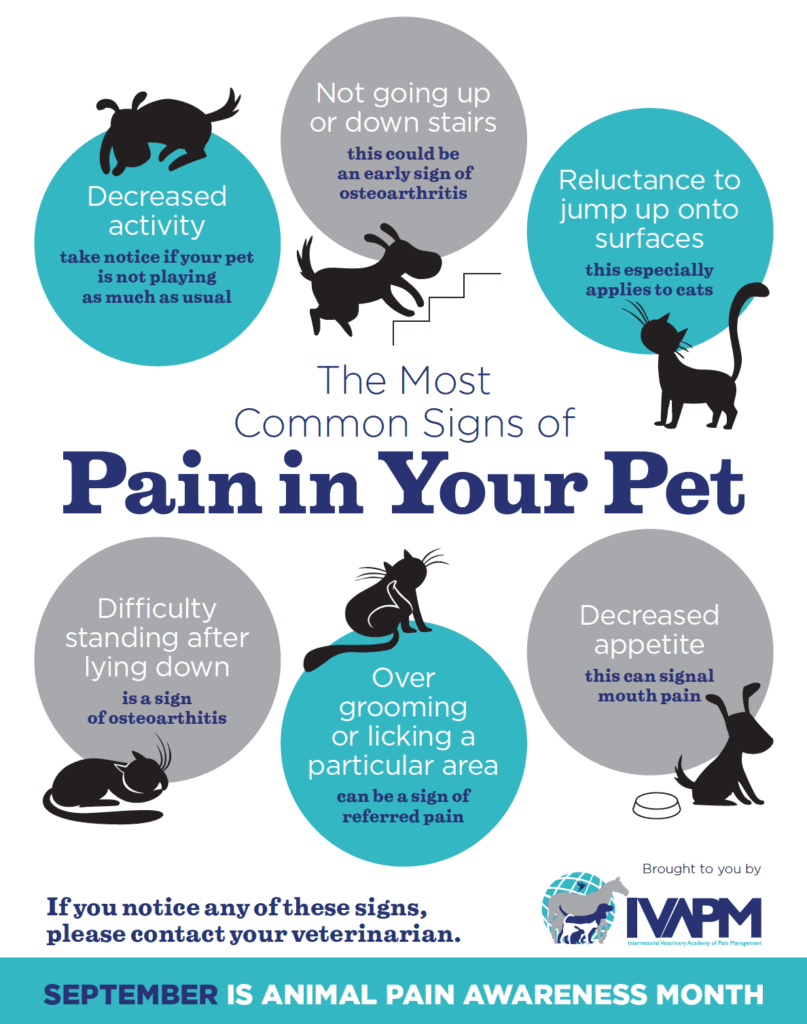
Animal Pain Awareness Month is here! To us, it’s a particularly important awareness month to discuss on behalf of the pets we love so much. It coincides with (human) Pain Awareness Month which creates a good opportunity to think on the ways that we are all affected by pain. Animals experience the same pains that people do. They just can’t tell us about it. Thinking about what you know about pain, whether from an injury, arthritis, after a procedure, etc. is a good place to start to be aware of an animal’s experience.

September is Animal Pain Awareness Month. These pups are glad to be exercising on the beach pain-free!Signs of Pain

Animal pain awareness begins with understanding that not all pain is obvious, and it certainly isn’t “just getting old” or “starting to slow down”. Our pets can’t describe what and how much it hurts, so we need to know how to observe signs of discomfort. We also need to consider symptoms over time. It’s easy for their pain to go unnoticed by us for a while. Many animals are famously better at just getting on with their days when something hurts than we are. This isn’t really a good thing, though, considering it can mask a condition. If a pet is showing visible pain, particularly with regard to something chronic or slow to develop, like arthritis or cancer, they might have been hurting for quite a while before they began limping or stopped playing as much. It’s up to us, their caregivers, to keep an eye out for possible problems so we can seek early intervention.

Here are some common signs to look for:

  • Decreased social interaction
  • Anxious expression
  • Submissive behavior
  • Whimpering
  • Howling or growling in dogs
  • Guarding behavior
  • Decreased appetite
  • Changes in posture or gait
  • Reduced activity
  • Quiet/loss of curiosity
  • Changes in urinary/defecation habits
  • Hissing or spitting in cats
  • Lack of agility
  • Excessive licking/grooming/chewing

If your pet is experiencing any of these signs of pain, it’s important to get the cause diagnosed quickly.

Pain Management

The best part about diagnosing the cause of pain is that your vet can then determine the best course of action to manage it safely and effectively. There are several options that range from non-invasive cold laser therapy (one of our favorite choices), to prescription pain relievers, supplements, or even physical therapy. Do not give your pet over-the-counter NSAIDS or other pain relievers without consulting your veterinarian first. Some have a very narrow margin of safety or are not safe to give at all.

Share Animal Pain Awareness With Others!

Maybe one of the best things you can do for Animal Pain Awareness Month is to share what you know with others! Education is invaluable. And it just might help an animal to live a longer, more comfortable life!

Did you know that cats can get a virus called FIV that has similarities to HIV in humans? FIV (feline immunodeficiency virus) compromises their immune systems for life. There is no treatment to cure it. Here’s what you need to know:

Outdoor cats are more likely to get FIV from fighting with other cats.FIV is Transmitted Primarily Through Bites
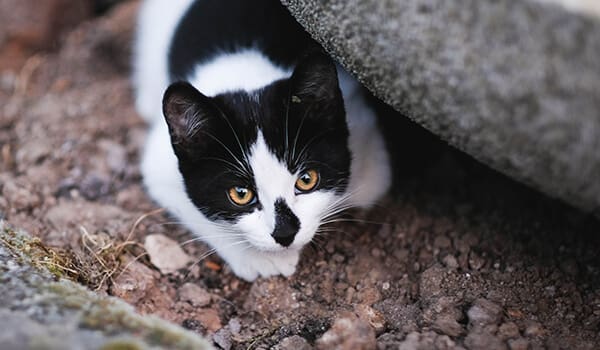
Cats spread FIV to each other primarily through bite wounds. Any cat with access to other cats, especially those who spend time outdoors, can get FIV. By extension, unneutered males are most likely to get FIV just because they commonly roam around and fight other cats. So let’s add this to the list of reasons why spaying and neutering doesn’t just prevent unwanted litters—it saves lives.

In more rare occasions, mother cats can pass the virus to their kittens during birth or nursing. Sexual contact among cats doesn’t appear to be an efficient way of transmitting the virus, and FIV is not transmitted through casual contact such as grooming, sharing bowls, or sneezing. Humans cannot get FIV from cats.

FIV Makes Cats Vulnerable to Other Infections

By impacting the immune system for the rest of a cat’s life, the cat will be more susceptible to infections caused by bacteria, viruses, fungi, and protozoa. Though symptoms may not be obvious for months or years, FIV-infected kitties are more likely to have anemia, chronic inflammation or infections of the mouth and gums, bladder, skin, eyes, etc. Less often, cats will show behavioral or neurological changes. Patients usually have gradual weight loss that can become severe later in life. They are also more likely to develop certain kinds of cancers.

Despite all this, many cats who are very well cared-for can live long, relatively healthy and happy lives. This is where preventive care is key!

Diagnosing FIV

FIV weakens cats' immune systems.FIV tests look for antibodies that the body developed to the virus. It is possible to get a false-positive on tests, so any positive result will be followed by a second test that is sent to a laboratory for confirmation. Cats who have previously been vaccinated against FIV may test positive as a result of the vaccine, so it’s important to be thorough in providing your cat’s medical records to your veterinarian.
A negative result is typically considered accurate, but it can take 8-12 weeks after a bite for the body to produce enough antibodies to be measurable for diagnostics. For this reason, if your cat has been bitten by another cat, please note when it happened when you speak to your vet.

Prevention is Key

Prevention is super important, not just for your own cat, but also to prevent the virus from spreading to other kitties. Spay/neuter and keep your cats indoors to prevent the situations where FIV and other illnesses are transmitted. FIV vaccines may be recommended by your vet on a case-by-case basis.

Questions? Let’s talk!


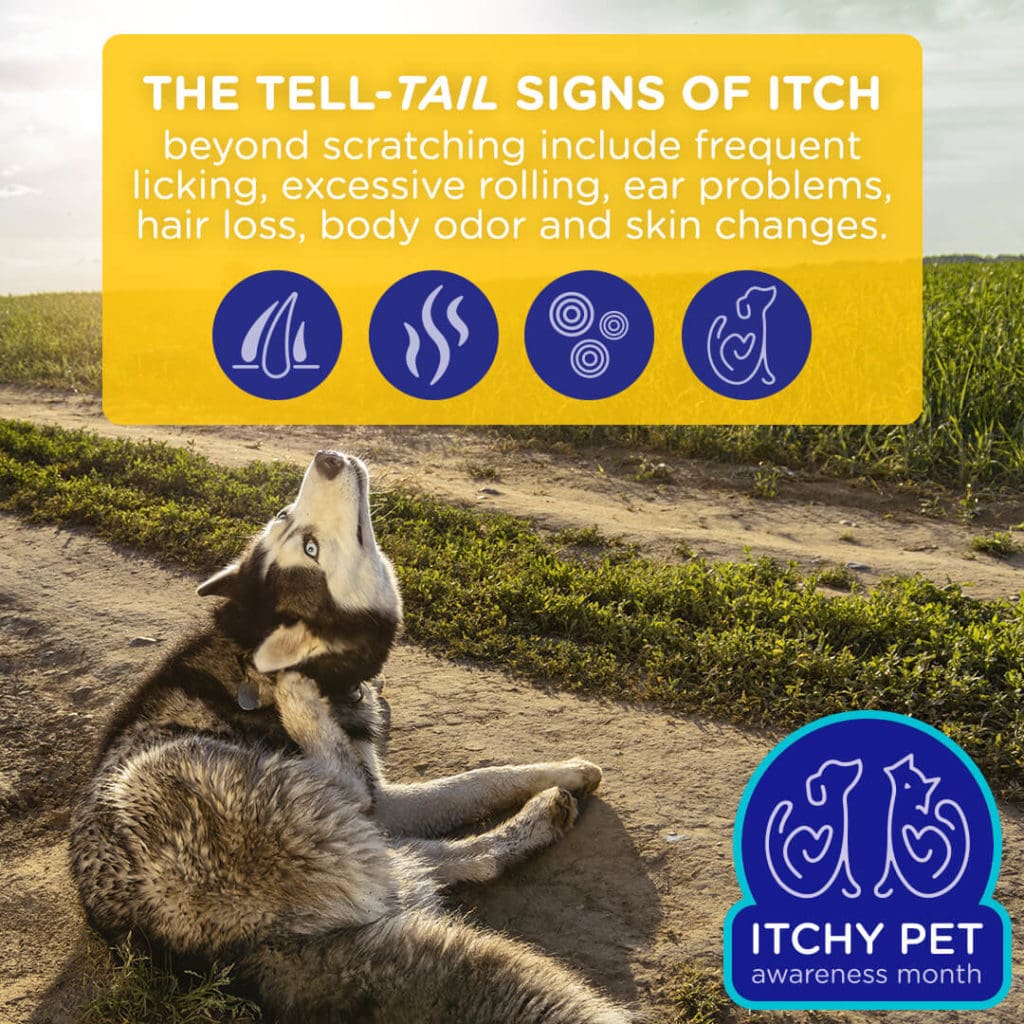
August is Itchy Pet Awareness Month! We all get itchy sometimes, so why is there an awareness month for it? After all, itching is nothing new or scary, right? Your pet might be scratching an itch as you read this, and you aren’t thinking much of it. Or maybe your lab is rocking the entire sofa as she scratches her ears desperately, and it’s all you can think about.

Signs of skin problems in pets!“Awareness” is important, though, because itchy dogs and cats might be telling you something about their health. Many pet owners don’t know that itchiness can often be a symptom of a problem that actually requires treatment. The causes can range from food and/or environmental sensitivities to parasites or nutritional needs. Hot spots, bacterial and fungal infections are frequently found during dermatologic exams, too. These, in particular, tend to take some time to develop, so the good news is that early intervention into the cause of the itch can prevent raw or infected skin.
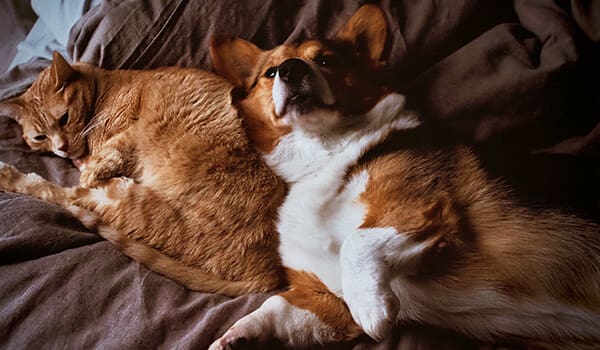
If your dog or cat is licking, chewing, rubbing, or scratching more than usual, be sure to spend some time looking over your pet. They tend to love when you pay extra attention to them anyway, right?

Ask Yourself These Questions About Your Pet’s Itch

  • Is there any redness or irritation of the skin, ears, or paws?
  • Do your pet’s skin, ears, or paws have a yeasty smell?
  • Are there any changes to your pet’s coat? Loss of hair, dryness, etc.?
  • Has there been a noticeable increase in itchiness recently?
  • If so, have you introduced any new food or treats recently?
  • Does the itchiness seem to coincide with when people experience seasonal allergies?
  • Have you seen any signs of fleas or ticks?

Now Tell Your Pet’s Veterinarian

August is Itchy Pet Awareness Month.

When you see your vet, it’s helpful to share the answers to any of these questions above to help us hone in on the source of the problem. We need to evaluate the cause and determine the most beneficial treatment, so, as veterinarians, we love it when our clients paint a picture for us of what they have noticed at home. Your pet’s wellness is a team effort!

Learn more at the official August is Itchy Pet Awareness Month website.


We love our pets. They are sweet, funny, cute, beautiful, and snuggly. They are proven to be both physically and emotionally therapeutic. They are even good for our social lives. And perhaps it’s selfish, but humans do love to be loved in return—who else is so happy to see you every time you walk through the door? Pets are furry family.

Gazing into the eyes of your vet boosts your love of them by increasing oxytocin.

We think “kitty cat eyes” are pretty effective, too.

While that unconditional love from your dog or cat is part of their charming nature, there is science that proves that the most simple of actions between pet and owner is deepening our mutual love every time we do it. Those “puppy dog eyes” are tugging our heart strings by causing an increase in the love hormone, oxytocin.

Gazing into Each Other’s Eyes Boosts Oxytocin

Humans, as a species, use our eyes for communicating and bonding. Oxytocin, produced by the hypothalamus, is secreted for various reasons, but the emotional, bond-forming payoff is clear. When we gaze into each other’s eyes, there is a boost in our oxytocin levels which deepens emotional connection. This helps us to form bonds, fall in love, and even strengthen some memories.

A 2015 study of dogs determined that the same thing happens with our canine friends. When we gaze into their eyes, we produce oxytocin that makes us love them more. When they gaze in ours, the same thing happens to them. They can even produce oxytocin as a result of smelling ours! Biology is wonderful and weird!

Puppy dog eyes have science to back why we love them.What’s more, it appears that as we domesticated dogs, they might have developed this to adapt to their new relationships with humans. How do we know this? Because their wild, wolfy relatives don’t rely on eye-to-eye gazing for bonding. If we take this a step further, modern dogs have even developed the specific muscles that allow them to be so expressive with their eyebrows. Wolves don’t appear to have those muscles at all!

What about cats? We haven’t found any corresponding studies of cats looking for the exact same traits, but we’d wager that the findings would be similar. Cats and eye contact just seem to go together.

Dogs are more likely to run away and get lost on the 4th of July than most any other time of the year. They can be stressed by all the commotion of the cookouts or travel, then on top of that many are in complete fear of the sounds of fireworks. Fear makes even the best of us do things we wouldn’t normally do—like running away to hide from the scary noise then ending up lost. It’s also a tempting time to eat inappropriate things, like dangerous chicken bones from your BBQ, or even fireworks. Yes, according to the ASPCA Animal Poison Control Center, they get a lot of calls about dogs eating fireworks. No one ever accused a dog of having a refined palate. (Flint on the nose, lovely, bright acidity with a dry mouthfeel, mineral with a charcoal finish?)

Let’s take a look at a few ways to keep your dog safe on the 4th of July, and even the next time New Year’s Eve rolls around.

Dogs get lost most in July largely due to fear of the sound of fireworks in Raleigh.Fear of Loud Noises in Dogs, Especially 4th of July Fireworks


First thing’s first. If you know that your dog is scared of thunder, he or she will also be scared of fireworks. Even the small ones you or your neighbors might want to set off are likely to be a problem. Many dogs take off just trying to escape the source of the scary sounds. Maybe they slip out of their collar or dart out a door or gate. They are likely to run and hide without thinking about where they are going: away from the fright is all that matters in the moment. This is how they get lost so easily. If your dog gets lost, and you are unable to find him or her quickly, contact your neighbors for help immediately, and call animal control to see if your dog has been picked up and taken to the county shelter. If your dog is picked up but not microchipped or wearing tags, they will be placed on a 72-hour “stray hold” with the county. You have 72 hours to reclaim your dog.

For extreme cases of fear, it’s possible for your vet to prescribe a medication to help keep your pup calm. This should be done with care and planning, though. Do not ever give your pet a sedative without the guidance of your veterinarian.

Create a Calm Place for Your Dog

If the sound of fireworks near your home is unavoidable, seeking an interior room that is quieter and turning on the tv or music is recommended. Be calm and laid back yourself so that your dog doesn’t pick up on your worry. Some tasty treats to create a positive association can’t hurt either.

Speaking of Tasty Treats…

Holidays are prime time for dogs to eat things that are bad for them. Be extra careful that your pup doesn’t have access to inappropriate food. Sometimes it’s a matter of an open trash can at a cookout. Sometimes it’s a guest who doesn’t realize that leftover bones from their dinner plate can splinter in the intestines. Don’t be afraid to ask your party guests to not give any food to your dog, no matter how cute those begging eyes are.

Travel Stress & July Heat

The 4th of July is a prime time for travel. Be sure to plan well if your pets are going with you. Be mindful of how travel can cause animals some stress, even if they typically enjoy a car ride. Never, ever leave your pet unattended in a car. You’d be amazed at how easily a car can get too hot, even when the temperature feels comfortable outside.

Lots of new people bustling around can also create stress in dogs. There’s just a lot going on! Be mindful of how your guests are interacting with your dog so that everyone involved has a positive experience.

Questions or concerns about fear and anxiety in dogs? Contact us!

Fireworks can be terrifying for dogs.