
"Of all possessions, a friend is the most precious."

- Heradotus

Why Do I Need to Clip My Dog’s Nails?

When it comes to nail hygiene, you and your canine friend have more in common than you may realize. Just as overgrown nails can become bothersome for humans, unkempt paws are a pain for pets and can make it hard for them to get traction on smooth surfaces. If you’ve ever played fetch on a hardwood floor then you know what we’re talking about: the Scooby-Doo style running in place, followed by a frantic skid across the room. This slipperiness may cause your pup to adjust their gait, which could lead to poor posture and chronic joint trouble. If their new stride goes unchecked, they could even experience hip dysplasia, arthritis, or other painful conditions in their old age.

If you notice these symptoms when your dog is in hot pursuit of their toy, it may be time for a trim! Here are some helpful tips for giving them a salon-quality “pawdicure.”
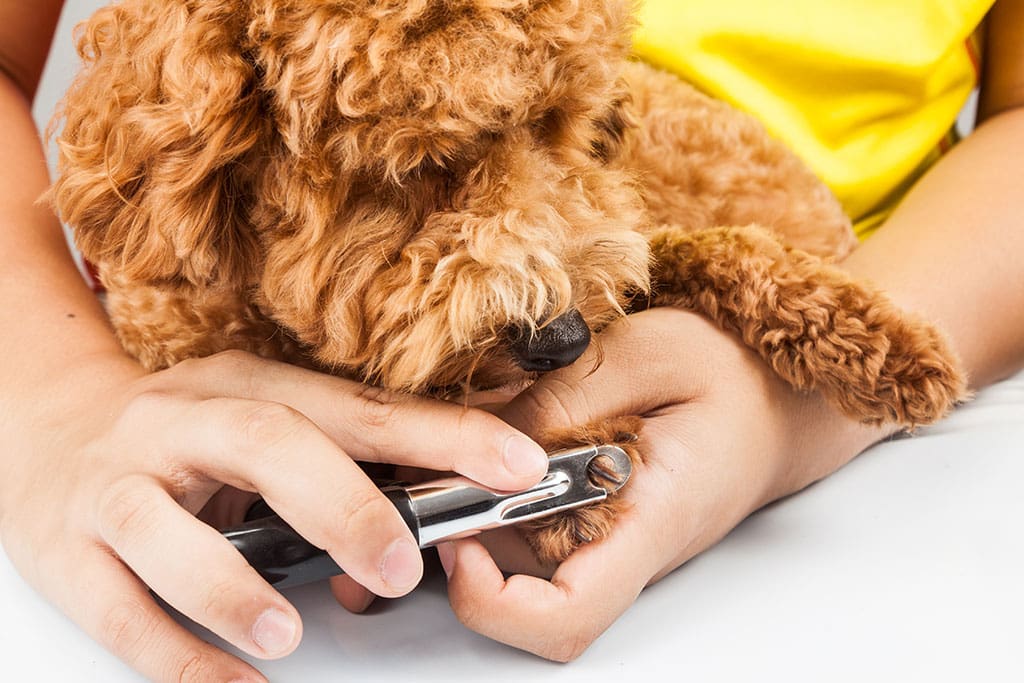
Dog toe nail trimming

1 | Teach Your Dog to Be Cooperative

Trimming nails is a team effort, so it’s critical that your furry friend is cooperative. If your dog has never had his nails trimmed –or had a bad experience with it– one way to reduce his anxiety is to get him accustomed to having his paws touched. Teaching him to “Shake” can be a fun and effective solution and can even come in handy when it’s time for a manicure. Just be sure you do this trick for fun as well: otherwise your pup may associate “Gimme Paw” strictly with nail time and shy away from your requests.

Getting your dog used to seeing the clippers can be helpful as well! Simply touch his paw with the trimmers and release (and throw in a treat for good measure)! He will gradually become desensitized to the clippers. Speaking of which…

2 | Get the Right Tools

Investing in a good pair of clippers is another way to make manicure time easier for both you and your canine friend. The clippers you choose should be comfortable and easy to use so you can trim your pup’s nails with confidence. Some modern clippers even have sensors, which tell you precisely where to trim!

3 | Prepare For the Trim

When in doubt, research! Read up on the best clipping methods and make a game plan: for instance, you might start out trimming just the nail tip, then make additional cuts once you’re more comfortable.

Choose a well-lit spot in your home to give you a clear, bright view of your pet’s nails. This will help reduce the risk of overcutting and injuring the quick— the nerve ending on each toe.

And remember: you’re only human. Mistakes happen, so why not prepare for them? Another tool to have handy is a styptic pen or powder, which will help stop the bleeding if you do cut into the quick.

4 | Reward Your Pup

Now that the deed is done, be sure to praise your pup and give him his favorite treat! Not only will he enjoy it, over time he may even associate manicures with rewards, making him even more cooperative during the whole process!

5 | Get Help From the Professionals

If you find that nail trimming makes you uncomfortable, ask your local Raleigh vet for a tutorial! They can show you their preferred method and give you pointers on how to replicate the process at home!

Alternatively, you can even bring your pup in for routine nail trims! Schedule your pet’s mani-pedi with a Raleigh, NC animal hospital today!


Let’s face it: most trends are fleeting. All-denim suits? So 2001. But some fads stick around and if the last few years are any indication, then succulents (and lavish indoor gardens) are here to stay!

Not only are plants are an excellent way to brighten up a room, they can be fun for cats as well! But before you bring home that fiddle leaf fig (fashionable though it may be), take a look at our article, where a Raleigh, NC vet discusses which plants are safe for your feline friend!

Succulents

Let’s get down to business: the plants you’re probably most curious about are succulents. Lucky for you, some of the most stunning varieties are totally safe for cats! Not only that, they also happen to be some of the most widely available kinds: you’re likely to find Painted Lady, Echeveria, Hen-and-Chicks, and variegated Wax Plants at your local home improvement store!

cat safe garden in raleigh nc by falls village vet hospital

Herbs

When it comes to creating a cat-conscious garden, one herb stands out among the rest: catnip! You probably know catnip as the tasty treat that your kitty can’t get enough of. But did you know you can grow it yourself, from the comfort of your own home? This herb is something that cats and cat owners alike can enjoy! Other feline-friendly herbs include such kitchen staples as rosemary, thyme, mint, and parsley.

Flowers

Flowers are an excellent way to add texture and color to your indoor garden! Just be sure you choose non-toxic species, such as Zinnias, Marigolds, and African Violets. If you’re an orchid or lily aficionado, take extra care to select the right ones, as there are many not-so-safe varieties.

Grasses

In addition to catnip, wheatgrass is another plant that cats can’t resist! It can be grown in a range of vessels, be it a small cup, large planter, or even a flat mat! Your furry friend will throw fashion to the wind and munch on it regardless, so the container style is up to you! In the same vein, you can also consider adding lemongrass to the collection!

Potted Trees

Potted trees are an opportunity to add height to your indoor plant sanctuary, and also happen to be exceptionally popular decor accents. Palms tend to be safe for cats, particularly the Ponytail, Peace, Parlor, Golden Butterfly, Good Luck, and Areca varieties. The Money Tree plant is also a safe and stylish addition.

Others

There are plenty of plants that do not fall neatly into any of the above categories, but are no less safe or exciting. These include some types of ferns (such as Boston Ferns), Spider Plants, Cast Iron Plants, Cliff Brake, Chocolate Soldiers and more!

Garden and flowers safe for catsGeneral Safety Tips

Besides the abundant availability of cat-safe plants, there are also many species that you should not bring home to your feline friend. Unfortunately, this includes many of the trendy varieties enjoying the social media spotlight. As we mentioned earlier, the Fiddle Leaf Fig can be dangerous if ingested and should be avoided. The same goes for philodendrons and elephant ears, which are extremely popular as well.

If there’s a plant you’re thinking of buying, we recommend that you consult the ASPCA plant database before you decide. They provide a comprehensive list of toxic and non-toxic plants so you can garden with ease!

If you’ve ever given catnip to your feline friend, you’ve probably witnessed its mysterious effects firsthand and wondered what it is about the herb that makes cats tick. In this article, we hear from a Raleigh, NC vet on this very topic!

First Thing’s First: Safety

We know that a pet owner’s primary concern in their animal’s health, so let’s get the scary question out of the way: Is catnip safe?

Yes! There are no known dangers of giving your cat this tasty treat. In fact, catnip is safe even for human consumption (more on that in a bit). For now, let’s explore what makes this herb so irresistible for felines!

Cat Facts by Falls Village Vet in Raleigh NC

Catnip Fun Facts

When we say irresistible for felines, we truly mean all felines: not only are domesticated cats attracted to the plant, but their larger, wilder cousins are as well! Indeed, catnip has been known to pique the interest of cougars, lynx, lions and tigers, to name a few! This link among all cats is important for a couple of reasons. For starters, now you know what NOT to bring the next time you go hiking or camping! Secondly, this revelation led scientists to discover that cats are especially sensitive to the herb: their noses contain special receptors that match perfectly with nepetalactone, the compound found in catnip. Add to the fact that there are over 250 varieties to choose from, your cat is has plenty of opportunities to experience this interaction firsthand!

Not All Noses Are Created Equal

As the above title implies, cats can have vastly different reactions–or even no reaction at all–to catnip! It’s an acquired taste… literally: kittens don’t seem to notice it until they’re a few months old! Additionally, research suggests that the herb only affects around two thirds of felines, while the remaining third simply go about business as usual. The good news is that figuring out if your cat loves catnip is easy: simply pour a small amount into a bowl and show it to your kitty. Like we mentioned above, reactions will vary, but they usually take one of two courses: your cat could become energetic and excited, demonstrated by running around, “talking” (meowing) a lot, or playing with other pets; alternatively he/ she may become drowsy, evidenced by yawning, drooling, or simply falling asleep!

How long do the effects last?

Let’s say your fluffy friend does have a taste for the herb. How long will he/ she be bouncing off the walls or snoozing lazily in the corner? These effects are very short lived, typically wearing off in 15 minutes or less. He/ she also won’t be susceptible to it again for about two hours thereafter: your kitty’s brain needs some time to “reset.

Humans Enjoy It Too!

If you’re looking for one more way to bond with your feline friend, look no further than catnip! Believe or not, this herb can be used to make soothing teas that are perfectly safe for human consumption. Catnip is also an effective (and safe) repellent for some commonly invasive bugs like cockroaches and mosquitoes. And if you have a green thumb, catnip makes a wonderful addition to any outdoor planter or indoor garden. Just remember that your kitties may develop a knack for gardening themselves!

Interested in learning more about pet health and care? Contact us –your Raleigh, NC pet hospital– today!

April is Heartworm Awareness Month, so we’d like to take some time to address some misconceptions that we hear from pet owners regarding heartworm disease and prevention.

MYTH | Heartworms are a scam made up by the veterinary industry to make more money.

Unfortunately, heartworms are a very real threat to the health of our beloved pets. Transmitted by mosquitoes, these parasites develop from microscopic larvae into worms up to a foot long. They live in the circulatory system and cause damage to the heart, lungs and blood vessels. Untreated, a dog may become the host for several hundred of these worms. Physical blockage of the heart and blood vessels can occur, resulting in death. The worms sometimes migrate outside of the circulatory system, causing direct damage to other organs. While there is a drug to treat heartworms in dogs, there is nothing that can reverse the damage that has been caused by their presence. Permanent scarring of organs can continue to affect the dog’s health and shorten its life.

MYTH | My dog is not around other dogs (and/or I have a fenced in yard), so he doesn’t need heartworm prevention.

Heartworms are not directly transmitted from dog to dog (or cat to cat). Mosquitoes are an intermediate host and serve as the method of infection. It only takes one bite by an infected mosquito to transmit heartworms to your dog or cat. And the mosquito becomes infected by biting a carrier animal – an infected dog, cat, ferret, fox, coyote, even a sea lion – so the source pool is quite large. Once established in a host, heartworms can survive for several years, so each year there is a greater number of infected animals in a particular area.

MYTH | Cats are not at risk for heartworm.

While cats are not a natural host for the heartworm, they can still be infected. In fact, this makes it more difficult to detect their presence. Once a cat is infected, only a few worms may be able to mature to adulthood if at all. However, even immature worms cause very real damage inside the cat. They often migrate through the body, especially the lungs. Affected cats often exhibit respiratory related signs, such as coughing and asthma-like attacks. These cats may be diagnosed with HARD – Heartworm Associated Respiratory Disease. Sadly, many cats with heartworms show no signs at all and simply collapse in sudden death. There is currently no treatment available for heartworms in cats.

MYTH | My pet stays indoors so I do not need to give him/her heartworm prevention.

As explained above, it is the mosquito that transmits heartworms. These tiny insects can be very aggressive and opportunistic in taking up residence and finding sources to feed on. The inside of your home is a paradise for mosquitoes – climate controlled, sources of water, and hosts to bite. They can enter through tiny cracks in windows or vents, or simply follow you as you enter through the door.

MYTH | I have my yard sprayed for mosquitoes/we have lots of frogs in the yard, so my pets are protected.

It is great to have a method of controlling mosquitoes for the sake of you and your family’s health and comfort. However, since we aren’t able to create a mosquito blocking force field around an area, there is no way to keep your environment totally pest free. Knowing that it only takes one bite from one infected mosquito to infect your pet, do you really want to take that risk?

MYTH | My dog was given heartworm prevention during his first visit to the vet, so he is protected for life.

It would be wonderful if there was a product that could provide life-long prevention. However, the majority of currently available preventatives must be given every 30 days. (There is an injectable product that works for 6 months). These preventatives work by eliminating any immature heartworms that may be present in your pet at the time they are given. So in a scenario where you give your pet his prevention on the first of the month, the dose given on April 1st attacks any heartworm larvae that have been introduced since the previous dose on March 1st.
These medications are unable to eliminate any worms that have developed into the adult stage. If they are not given every 30 days, this increases the chances that there will be larvae that make it to the adult stage.

MYTH | I only need to give heartworm prevention during warm weather months.

Mosquitoes can be present in an area year-round. There are many different species, each with differing ranges of cold tolerance. Studies have also shown that some species can successfully survive over the winter completely indoors. My personal experience is that I seem to get mosquitoes in my house every December.
According to the University of Florida, sixteen species of mosquitoes have been identified as natural hosts of D. immitis (dog heartworm) in the United States east of the Mississippi River.
To properly protect your pet, give heartworm prevention every month, year-round.

MYTH | I give my pet heartworm prevention every month. He does not need to be tested for heartworms.

Even with monthly preventative, there is still a chance your pet could become infected. Your dog may spit out his pill when you are not looking, or rub off a topical medication. There may be worms that survive the exposure to the preventative and go on to become adults. A veterinarian that I used to work with liked to compare heartworm prevention to birth control – neither are guaranteed 100% effective.

Heartworm disease is progressive, and the sooner an infected dog is treated, the better the chances for a successful treatment and healthier life post-treatment. It is key to detect the presence of heartworms sooner versus later.

Additionally, the heartworm test we use here at Falls Village also detects 3 common tick-borne diseases – Lyme, Ehrlichia and Anaplasmosis. These can also affect your pet’s health, so it is important to check for them on a regular basis.

MYTH | I brought in a stool sample from my dog and it was negative, so he does not have heartworms.

Checking a stool sample for intestinal parasites is an important part of your pet’s routine wellness check. However, to test for heartworms a blood sample is needed. It takes as little as three drops of blood to run the test.

MYTH | I use those flea drops every month, I don’t need to use another product for heartworms.

There is a wide variety of products available to protect your pet from fleas, ticks, intestinal parasites and heartworms. However, there is currently not any one product available that covers all of these parasites. Many of the available heartworm prevention products do also provide control of intestinal parasites.


Talk to your Raleigh, NC veterinarian to determine which products are best suited for your pets!

Would you know what to do if your canine friend was ever injured? We truly hope this never
happens to any of our clients, but we do want you to be prepared in case of an emergency. While
a serious injury will of course require immediate veterinary care, you may have to provide some
first aid before your dog can be transported. In this article, you’ll read some tips on what to do if
your canine friend ever gets hurt.

Evaluate

Pale gums, quick breathing, unconsciousness, seizures, weak or fast pulse, and difficulty
standing are all signs that a dog needs immediate medical care. Seizures, excessive bleeding, and
a change in body temperature are also red flags. If you aren’t sure if your dog’s injuries require
immediate care, always err on the side of caution, and take your pup to an emergency clinic right
away.

First Aid

In an emergency situation, you may need to act fast to save your canine pal. The last thing you
want to do is scramble for instructions, so we recommend downloading a few pet first aid apps.
That way, you’ll always have the information on your phone.

Poison

If your dog has ingested something toxic, call the ASPCA poison control center at (888) 426-
4435. Once they have the details, the staff will be able to advise you on exactly what to do next,
including inducing vomiting, if needed.

Moving Your Dog

Even if Fido is normally friendly and gentle, he might bite if he’s hurt. Talk to your dog before
trying to touch him. If he growls or bares his teeth, you may need to muzzle him. Once your dog
is secure, you can move him into your car. You can use a strong box or laundry basket to carry a
small dog. For bigger pups, use blankets or sleeping bag to make a temporary stretcher.

Call Ahead

Call your emergency clinic before leaving, so they will be expecting you. This will allow
veterinary staff to prepare for your arrival, and may save precious time.

Preparation

We strongly recommend getting a first aid kit for Fido. The kit should include his papers and
first aid brochures, as well as basic medical supplies, such as gauze, non-stick bandages, and
antiseptic spray.

Please contact us for all your pet’s veterinary care needs! We are always happy to help!

Every day we work with clients that have needed to take their pet in for emergency care and realize that this can be a stressful experience – your pet may be hurt and scared and you are having to take him to an unfamiliar place and may not know what to expect. We want to take this opportunity to describe the process of an emergency visit to the Veterinary Specialty Hospital of the Carolinas to help you be prepared should you ever find yourself in this situation.

Raleigh NC Vet Card Falls Village Veterinary HospitalMedical problems in your pet can arise unexpectedly at inconvenient times. This can range from a true life threatening emergency to a painful ear infection. For such occasions we are fortunate to have a trusted relationship with an exceptional team at the Veterinary Specialty Hospital of the Carolinas (VSH), a 24 hour emergency and specialty hospital that is there to help after hours until we reopen. When you call our office after hours, you will be given the option to connect directly with the Veterinary Specialty Hospital of the Carolinas. They will advise you as to the urgency of the medical situation and if your pet should be evaluated by their 24 hour emergency service. Alternatively, if appropriate, they may provide some advice for at home care until our office reopens. In any circumstance, if you feel the problem can’t wait, they will gladly provide an evaluation and recommendations.


Where Can I Visit for a Pet Emergency?

Veterinary Specialty Hospital has three locations in the Triangle (Cary, Durham and North Raleigh), with the North Raleigh location being the most convenient to our office (4640 Paragon Park Rd., Raleigh, NC 27616 – On Capital Blvd, just north of I-540).

What Can I Expect During a Visit?

Once you arrive at VSH, your pet will be seen within minutes by a triage nurse to determine the urgency of the situation. Like all emergency rooms human or animal, patients are triaged and treated based on the severity and life threatening nature of their condition. The staff will make every effort to have your pet seen by an emergency veterinarian as quickly as possible and keep you informed if other more critical patients need to be treated first, requiring a wait time. As soon as possible an emergency doctor will talk with you to get a more complete medical history and perform a thorough examination of your pet. The emergency doctors at VSH all have advanced training after veterinary school or multiple years of experience in emergency medicine. Based on their assessment, they will make the best recommendations for the care of your pet but will also provide options for different levels of care and associated risks. If they deem the problem is not too serious, your pet may be treated as an outpatient. In this case, a summary discharge sheet with care instructions and recommendations on when to follow up with your veterinarian at Falls Village will be sent home. A copy of this discharge summary will also be provided to us via electronic means.

What if My Pet Needs Additional Treatment?

Hospitalization and further care may be recommended if the problem is more serious or uncertain. Hospitalization could be needed for such reasons as additional diagnostic tests (radiographs, blood tests, etc), intravenous therapy, close patient monitoring or even emergency surgery. You will be given a plan for initial treatments and tests for the care of your pet. This will be accompanied by a financial estimate from which a deposit of the low end of the estimate range will be collected. You will also sign a consent form for the procedures and treatments you authorize. Once hospitalized, a team of veterinary nurses and doctors will be caring for your pet 24 hours a day. If needed, VSH has a staff of other specialists including internists, radiologists and surgeons that can be consulted. All of these specialists have completed rigorous residency training programs and board-certification examinations. For instance if serious emergency surgery were deemed necessary, one of these board certified surgeons is on call to come to the hospital to perform surgery along with a trained veterinary nurse anesthetist.

How Do I Transfer My Pet’s Records?

Regardless of the course of events, once Falls Village Veterinary Hospital has reopened, communications between your doctor here, yourself and the veterinarians at VSH will occur so that the best continued care based on your needs and your pet’s needs can be provided. At times your pet may have improved enough to go home with a recheck visit to be scheduled at our hospital as appropriate. Sometimes, your pet will be transferred directly back to our hospital for continued care. Your pet may also stay at VSH if needed due to an unstable condition, the need for more extensive testing or treatments, or if consultation with a specialist is needed. In those cases, continued communication between your VSH doctors and your Falls Village veterinarian will occur to make sure that all involved are up to date with your pet’s progress.


By building a trusted relationship with the team at VSH, we know that you will have the best medical care for your pet regardless of the time of day or day of the week that a problem arises. The care team at Falls Village Veterinary Hospital strives to make the medical care of your pet as worry free as possible.


Special thanks to Dr. Waddle at VSH for providing the content of this post.

Cooties, bugs, worms. No matter what you call them, parasites are the lowest of the low. They suck blood, steal nutrients, and spread disease. They are disgusting, and it’s easy to understand why no one wants to think their dog or cat could possibly be infested.

Yet parasites are a fact of life for many pets, a fact of life we can change. Parasites can live in the fur – ticks, fleas, even lice. They can live in the intestinal tract – whipworms, roundworms, hookworms, and tapeworms. They can even live in the heart and lungs. At times, they can be a nuisance, but in many cases, parasites can cause illness and even life-threatening illness. Many of these parasites can also be spread to humans.

fleas and tickets treatment for dogs and cats

Why are pets so susceptible to these critters?

In large part, the answer lies in how our pets define “fun”. Rolling on the ground, nibbling who-knows-what in the back yard, associating with other pets out on walks. Even our indoor-only cats are at risk when they hunt the stray insect that runs through the house in the middle of the night or get bitten by a bloodthirsty mosquito that has followed us inside.

Preventative Care

Fortunately, most parasites can be prevented. Most monthly heartworm preventatives will eliminate several species of intestinal parasites. An annual or semi-annual fecal will screen for those parasites that the preventatives don’t protect against. There are a number of monthly flea and tick preventatives, including chewable tablets. These are important to reduce the risk of diseases like Lyme disease and Ehrlichiosis, which are transmitted by ticks.

Parasites are an often ignored, grossly misunderstood, painfully under appreciated threat to the health of our pets. Even the indoor-only pets! Annual screening and year-round use of monthly prevention can go a long way to ensure our pets lead healthy, happy lives.


-Dr. Ginger Templeton, DVM

As of June 2nd, 2017, the Rollins Animal Disease Lab in Raleigh confirmed the death of a dog due to the canine influenza virus. The dog was from the Raleigh area.

Raleigh Vet Dog Health Checkup

Susceptibility and Spread

Canine flu is fatal in approximately 10 percent of infected dogs. Additionally, if left untreated, complications such as pneumonia can develop. It cannot be spread to humans, though humans can unwittingly spread the virus by handling contaminated items such as food and water bowls. Cats can also be infected with canine flu.

Most commonly transmitted by coughing and sneezing dogs, the virus can survive on surfaces for 24 to 48 hours, so dogs can also be infected just by being in an area such as a dog park, grooming parlor, or boarding kennel that was visited by a sick dog.

Symptoms

Similar to the human flu, symptoms include coughing, sneezing, runny noses, fever and lethargy. However, 20 percent of infected dogs do not show any symptoms.

Preventative Care

For dogs that are exposed to other dogs or frequent parks, boarding or grooming facilities, dog shows and other dog events, vaccination for canine flu, as well as bordetella (a bacteria that causes upper respiratory illness) is strongly recommended. Keep in mind that being vaccinated may not keep your dog from becoming ill, but prepares the immune system to better fight off the disease, resulting in a decreased severity and duration of symptoms.

For more information regarding the canine flu–as well as proper methods of disinfection–please refer to the recommendations published by the NC Department of Agriculture.