Welcoming a baby into your home means big changes to your priorities and routines. Just like the human members of your family will need time to settle into a new rhythm, so will your household pets.
In addition to lots of new sounds and smells, babies can significantly impact your daily schedule and even the physical layout of your home. For dogs who get their sense of safety from predictability, this adjustment takes patience and support.
With a little strategy and preparation, you can help your dog take on the role of proud big brother or sister with less distress and anxiety. Here is what growing families need to know about preparing their dog for a new baby, facilitating a safe introduction, and building lasting bonds.
 Preparing Your Dog for a New Baby
One of the most effective strategies for helping your dog adjust to the changes that will accompany a newborn is to start introducing them before the baby arrives.
Gradual changes are naturally easier to accept than drastic ones, and starting your preparations early can prevent your dog from directly associating all the upheaval with the new baby.
Set your dog up for success in the months leading up to the birth:
The more you’re able to help your dog adjust to the coming changes in a low-stress environment, the more likely you are to have a smooth transition once the new baby comes home.
Less is more when it comes to the initial meeting of your dog and your new baby. As excited as you may be for this moment, a calm, controlled experience is better than an emotional one. Taking things slowly and respecting your dog’s limits builds trust and reduces the risk of fear-based behavior.
If possible, help your dog get some energy out before the meeting. A play session or a long walk can help them feel more relaxed during the introduction.
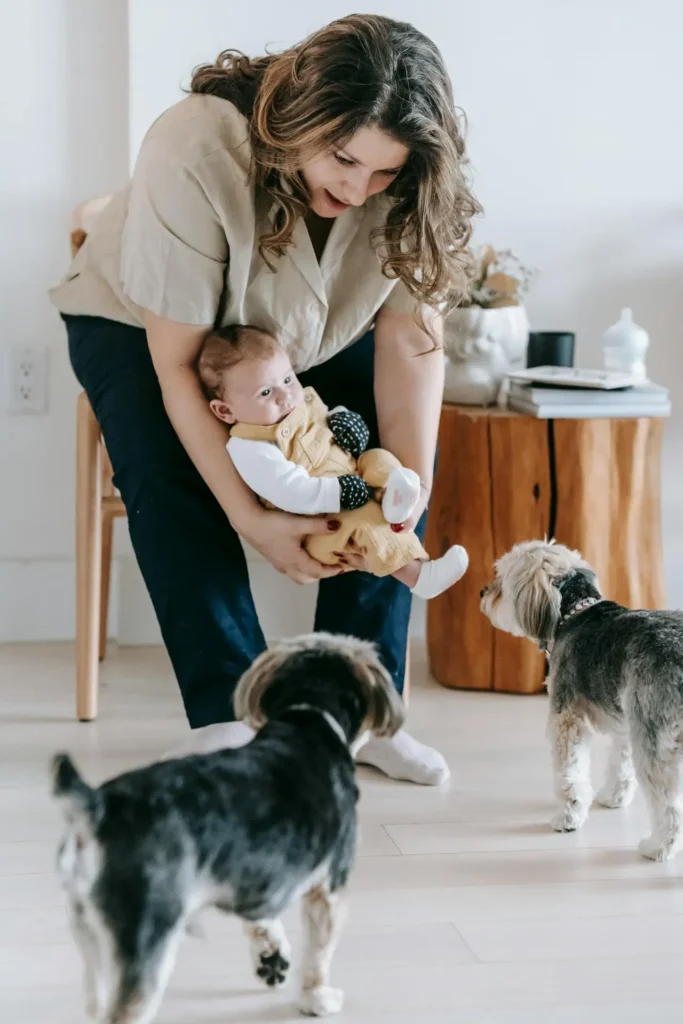
Keep the baby in an adult’s arms and bring your dog into the room so they can observe from a comfortable distance. If your dog is excitable, it may be a good idea to keep them on a leash initially.
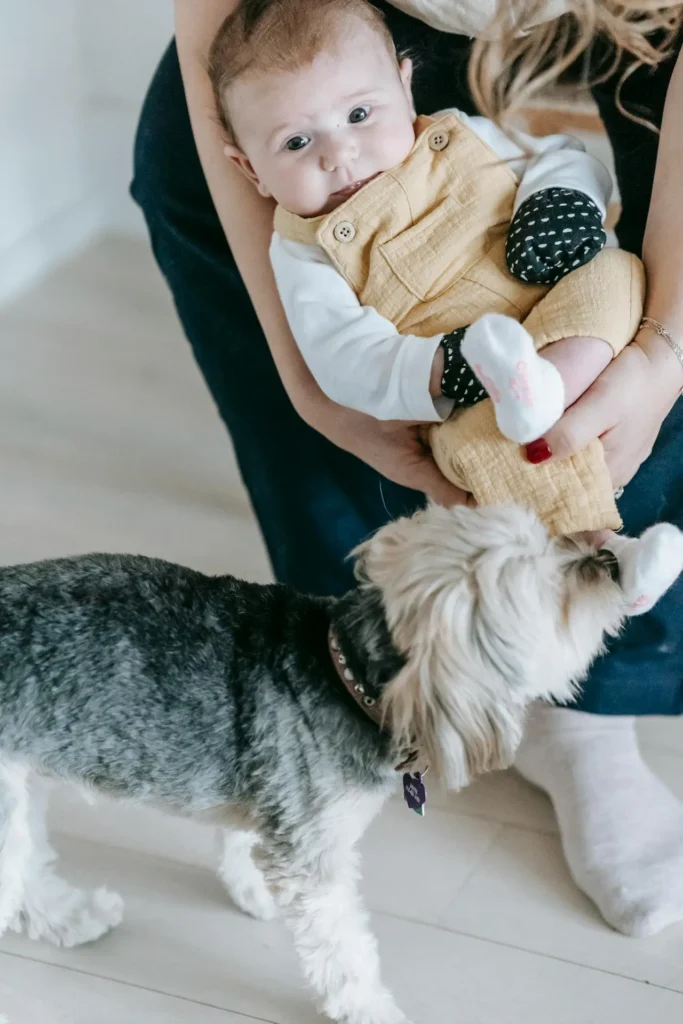
If your dog shows calm curiosity, gradually allow them to get closer. Offer lots of treats and praise for composure to help reinforce good behavior and form positive associations with your newborn. If your dog seems anxious, fearful, or even disinterested, don’t force them near the baby. The goal is to build tolerance, not make contact. Simply coexisting in a shared space is a successful first step.
Babies are unpredictable and unable to communicate boundaries. Overwhelmingly, infant dog bites come from familiar dogs who are startled or hurt during routine interactions. Even very gentle and well-behaved dogs need ground rules, for their safety as well as the new baby’s.
Here are some smart non-negotiables:
Our dogs may seem far removed from their wolf ancestors, but pack dynamics are still in play. The addition of a new baby can make your dog’s place in your home feel suddenly unclear.
Helping your dog feel included and secure can make a big impact on their adjustment.
Reassure your dog that they are still a valuable member of your family, and they will be more inclined to extend the love and loyalty they feel for you to its newest member.
Over the coming days and weeks, your dog should seem noticeably more at ease around the baby. If your canine companion remains fearful, avoidant, or hostile, however, professional support is in order.
Conflict with children is one of the most common reasons why pets are rehomed each year. With the right resources, this sad outcome is largely avoidable.
If your dog is struggling to adjust to a new baby, start at your vet’s office. Your veterinarian can screen for medical problems that may explain your dog’s behavior, prescribe medications for stress and anxiety, and recommend qualified trainers and behaviorists.
The right early intervention can prevent manageable problems from turning into long-term safety concerns.
You never forget your childhood pets. If you have precious memories of a loving, loyal, and protective companion, it’s understandable to want to recreate them for the next generation.
Establishing a bond between your dog and baby requires patience, structure, and supervision. By planning ahead and paying close attention to your dog’s cues, you can set the scene for a great relationship while still centering safety.






At Falls Village Veterinary Hospital, a Raleigh, NC veterinarian, dogs, cats & their families deserve the best. In fact, we specialize in delivering warm, compassionate care that reminds our clients and patients how unique and important they truly are. We provide complete veterinary care including dentistry, laser therapy, surgery, and more. Call us today!