While it can be frustrating, scratching is a completely normal instinct in healthy cats. Instead of attempting to eliminate scratching through punishment or declawing, learning your cat’s preferences can help pet parents redirect this behavior in less destructive ways.
If your couch, carpets, or doorframes are looking worse for wear, a few adjustments to your home can make all the difference. Here’s what pet parents need to know about the feline urge to scratch — and why your current scratching post may not be fully meeting your cat’s needs.
It’s easy to label scratching as “misbehavior,” but in reality, it’s a very practical instinct retained from their pre-domesticated ancestors.
Scratching serves several important purposes for your cat:
Because scratching is so connected to cats’ physical and emotional well-being, trying to eliminate it completely is unlikely to work — at least not without harming your cat. It’s best to think of scratching as normal, expected behavior and shift your focus to helping your cat find an outlet that works for you both.
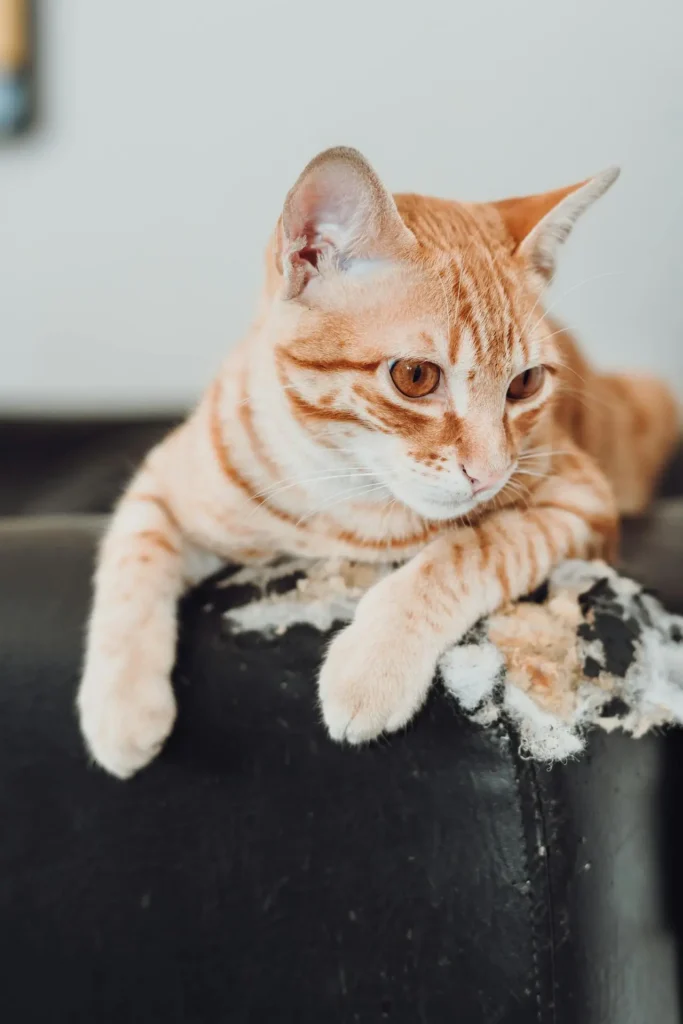
Cats do not choose scratching surfaces randomly. Usually, they are drawn to materials, locations, and textures they enjoy. If you pay attention, you may notice that your cat’s favorite places to exercise their claws all have something in common.
Cats often gravitate towards:
Unfortunately, couches, rugs, and carpeting check all of these boxes for many cats.
These targets are attractive enough under normal circumstances, but scratching instincts can become particularly heightened when cats are anxious or under-stimulated. Changes in the household, new pets, unfamiliar visitors, or lack of enrichment can all dial up scratching behavior.
As cats became more popular indoor pets in the 1950s, declawing was widely viewed as the obvious solution to shredded furniture and carpeting. However, it’s far from a simple cosmetic procedure.
Declawing involves not just the removal of the claw, but the amputation of the upper part of each toe bone. In human terms, the process would be analogous to removing the tip of each finger at the first knuckle.
Declawing can lead to:
Because of the pain and long-term effects associated with declawing, many veterinarians and animal welfare organizations strongly discourage the procedure.
The removal of their claws leaves many cats feeling permanently anxious and vulnerable, which can lead to other behavioral problems that are even harder to manage than scratching.
Rather than taking away a cat’s ability to scratch, it is much healthier and more humane to help them express this instinct in more desirable ways.
One of the biggest mistakes pet parents make is buying a single scratching post and assuming the problem is solved. Cats are picky, and many have strong preferences about how they like to scratch.
Your cat may prefer to scratch vertically or horizontally, or they may gravitate towards certain textures while completely ignoring others.
The best way to stop the destruction is to observe what your cat is already doing and provide alternatives that mimic their favorite problematic scratching spots.
For example:
Be aware that it may take some trial and error before you find your cat’s favorite scratching setup. Try to stay patient and follow their lead.

Even the best scratching post will not help if it is placed in a part of your home that your cat rarely accesses.
One of the main drivers of scratching behavior is communication — it’s why cats frequently scratch in high-traffic areas of the home. Individual preferences will vary, but in general, cats are more likely to actually use scratchers that are placed near the spots they already like to scratch.
If a carpet-covered cat tree is at odds with the aesthetics of your living room, take heart — options for modern-looking scratchers have exploded in recent years. Once you discover the shape and texture your cat prefers, you can invest in scratching equipment that suits your space.
Sometimes cats need encouragement to use new scratching surfaces.
You can make scratchers more attractive by:
Remember that cats will probably avoid posts that wobble. If they’re ignoring a new scratcher, make sure it’s positioned properly to feel sturdy and stable under their weight.
It can take time to fully redirect scratching onto more appropriate surfaces. In the meantime, you may want to take steps to protect your furniture.
While some pet parents have success with furniture covers and plastic sheeting, one of the easiest ways to reduce stretching is to keep your cat’s nails neatly trimmed. Manicured nails are less destructive to wood and fabric, and they address your cat’s need to shed dead keratin.
As you make the transition, it’s best to avoid punishing your cat for choosing the sofa over their new scratcher. Yelling and spraying water can make them fearful and anxious without doing anything to redirect their instincts.
Saving your furniture may require a two-pronged approach.
Cats who are bored or under-stimulated are more likely to fixate on exercising their claws. In addition to providing appropriate scratchers, increasing environmental enrichment can help.
Mental and physical stimulation helps many cats feel calmer and more satisfied, which may reduce stress-related scratching.
Experiment with:
There is no one-size-fits-all solution for scratching. Some cats love cardboard loungers, while others insist on tall sisal posts. Some have a dedicated scratching spot, and some prefer multiple scratching stations throughout the house.
It all starts with accepting scratching as a normal part of the feline experience. Patience and observation go a long way. Once you understand your cat’s preferences, it becomes much easier to guide their behavior in a positive direction.
With the right setup, you can protect your home while still allowing your cat to express themselves in a healthy, natural way.






At Falls Village Veterinary Hospital, a Raleigh, NC veterinarian, dogs, cats & their families deserve the best. In fact, we specialize in delivering warm, compassionate care that reminds our clients and patients how unique and important they truly are. We provide complete veterinary care including dentistry, laser therapy, surgery, and more. Call us today!