
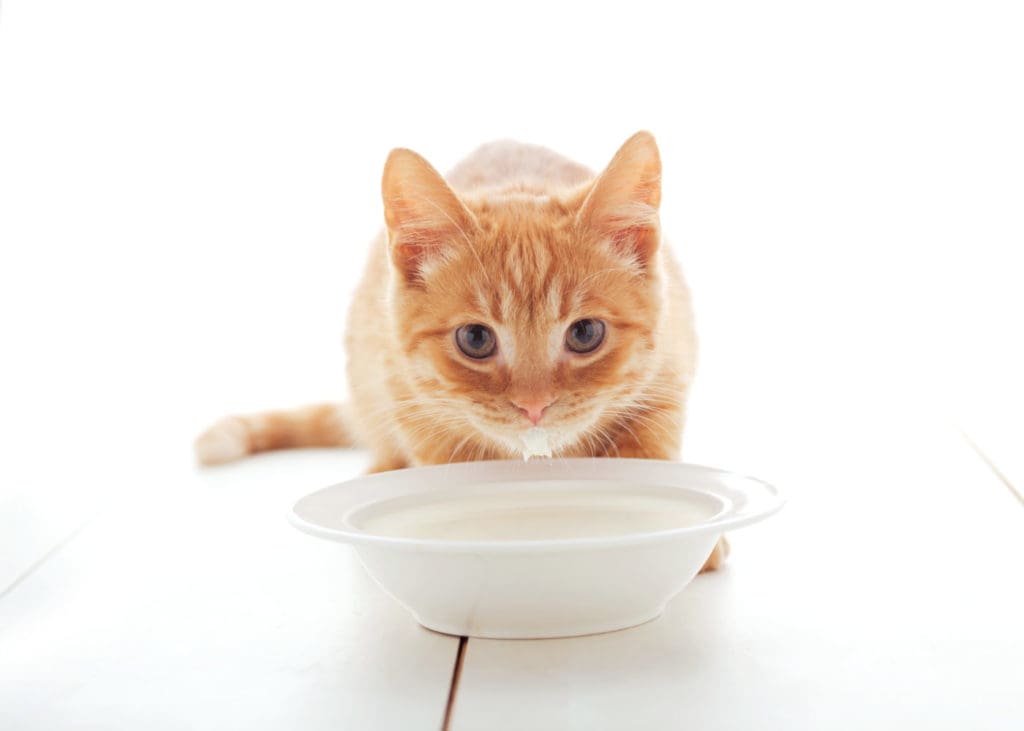
You’re probably already aware that some common household foods are toxic to our furry friends, but many pet parents are surprised to learn that milk can do cats more harm than good. For the vast majority of kitties, milk is difficult to digest and can lead to intestinal upset and potentially serious complications.
 What is feline lactose intolerance?
Lactose intolerance in cats looks a lot like it does in us. Just like human babies, kittens are born relying on milk as their source of nourishment. When our fur babies are small, they naturally produce an abundance of an enzyme called lactase, which allows them to break down the sugars in their mothers’ milk. Shortly after kittens are weaned, their digestive systems begin to slow the production of lactase. For most adult cats, this enzyme disappears altogether.
When a cat (or a human for that matter) doesn’t produce sufficient lactase and snacks on dairy products, the naturally occurring milk sugars pass through their system undigested, leaching water from their intestinal tract and causing potentially painful inflammation.
What are the symptoms of lactose intolerance in cats?
If you are part of the 65% of the human population who is at least somewhat lactose intolerant, you’ll have no trouble imagining the discomfort that a saucer of milk can cause your furry friend. If your kitty sneaks a drink of your cereal milk, symptoms may appear over the next 8-12 hours. Keep an eye out for:
- Diarrhea
- Bloating
- Vomiting
- General discomfort
- Gas
- Dehydration
Keep in mind that cats are often guarded about showing their discomfort, so you might not be able to tell for sure if there is minor upset. For all these reasons, we find it best to avoid giving cats a saucer of milk — to stay on the safe side.
Safe treats for cats who love milk
Just like the lactose intolerant among us choose to endure bloating and discomfort to enjoy the occasional dairy product, digestive woes won’t stop your cat from craving milk. You may be tempted to skirt digestive issues by offering your cat almond or soy milk, but plant milk alternatives contain thickeners, stabilizers, and excess sugars that aren’t good for cats. Fortunately, there are some “creamy” foods and treats on the market made especially for kitties, that allow your cat to enjoy the occasional treat safely and comfortably. Stick with these.
The bottom line
For your cat, the most serious risk of unaddressed lactose intolerance is dehydration brought on by vomiting and diarrhea. Cats are notoriously poor drinkers, and conditions that cause excessive fluid loss can pose serious risks to your fur baby’s health. If you are concerned that your kitty may be experiencing GI upset or dehydration, don’t hesitate to contact us. We’re here to answer your questions and keep your best friend in the best of health.
 Dogs
Dogs Cataracts are frequently hereditary, and some breeds are more prone to them than others. Even so, pets without the genetic marker may still develop them. For this reason, DNA testing is advisable for breeders, but we can’t be certain if a pet will face vision loss from cataracts in its lifetime.
 Anesthesia can be scary for people to imagine their fur kids going through at any age. A common concern, though, is whether or not a dog or cat is too old for anesthesia. While this is a bit of an oversimplification since health status can vary between senior animals, it makes sense to compare the present with possibilities in the future. It helps us to plan.
 So, it’s not a stretch to suggest that neglecting a dog’s or cat’s dental hygiene can actually shorten the window of time where they are in good health.
  If you have ever experienced arthritis pain being worse in the winter or before a cold, rainy day, then you know exactly what dogs and cats are feeling this time of year. Or maybe you are skeptical—after all, human studies on the topic are largely inconclusive. The anecdotal evidence, however, is consistent. Grandmas everywhere seem to agree that