
Raleigh dog laws are important for all residents to know. Luckily for locals, the laws that are in place are pretty balanced and to the benefit of both the dog and the dog owner. Some seem obvious, but others aren’t because they have some specifics involved. For example, did you know that there is a tethering law that hinges around a set maximum number of hours dogs can be tied out?
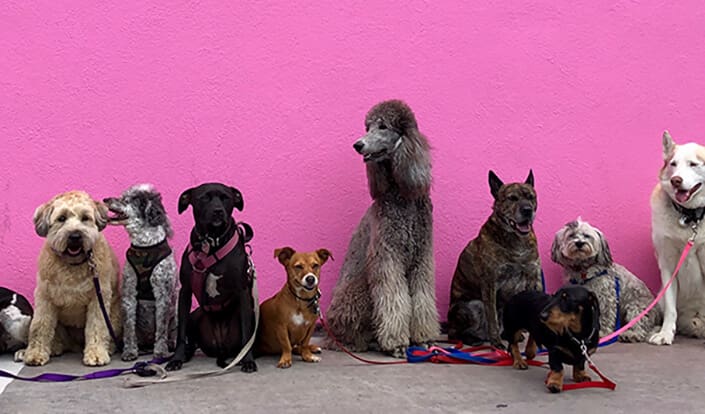 We think it’s a good idea to be familiar with these not just for ourselves, but for others. After all, the animals are protected by these, too. So even if our personal dogs are spoiled-rotten couch potatoes without a care in the world (spoiled as they should be 🤷♀️💜), we’re really doing our due diligence to just be aware. Let’s take a look!
Dog Laws in Raleigh, NC
Many of Raleigh’s pet laws actually pertain to both dogs and cats. This is not a comprehensive list. For additional laws, see the City of Raleigh’s website. Note that Wake County doesn’t have jurisdiction for enforcing animal control laws in Raleigh, Cary, Garner, or Holly Springs. Each of these municipalities has its own ordinance.
Tethering
A dog may not be tethered or otherwise restrained while unattended for more than 3 hours in a 24 hour period. This prevents accidental strangling and works to prevent them from being left out in harsh weather conditions. Anything used to tether a dog temporarily must be at least 10 feet long.
Leash Law
It’s against the law for either dogs (or cats!) to be allowed to run loose off of their owner’s property except in designated areas like dog parks. Did you know that you can be given a misdemeanor citation for this?
Adequate Shelter
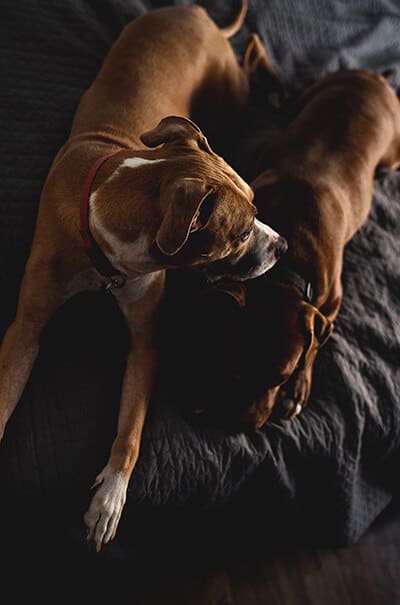 Dogs and cats must be provided with adequate shelter. This means that at a bare minimum, they must have some sort of “house” that is enclosed on at least three sides, has a roof, has a floor, good ventilation, and plenty of room to lie down in comfort. This means that if a dog lives loose in a backyard without housing provided, even if the owner thinks that it has shade and protection under a deck or carport, the owner is breaking the law.
As a side note here, we have witnessed the heartbreaking results of pets being left out in heat or extreme cold. We recommend that you bring them inside.
Raleigh’s Pooper Scooper Law
Yep. Raleigh dog laws include a “pooper scooper” law. If you leave dog poop on private property of anyone who hasn’t given you permission to leave the poop, you’re breaking the law. This law exists primarily for health reasons. No one wants poop affecting water supply or the spreading of intestinal parasites, but it’s also just good manners.
Does Raleigh Have Breed-Specific Legislation (BSL)?
No. And we’re proud of our city for this. A few cities around the country have banned certain breeds from living within the city limits despite controversy and upset in their communities over it. Pitbull-type dogs are one example, and we can vouch for what great dogs they are as a whole. It’s hard to think of a breed of dog we haven’t treated as patients, and we’re glad to have them all!
Are Dog Tags Required in Raleigh?
No. They used to be, but this ordinance was lifted in 2012.
 Dog Breeds
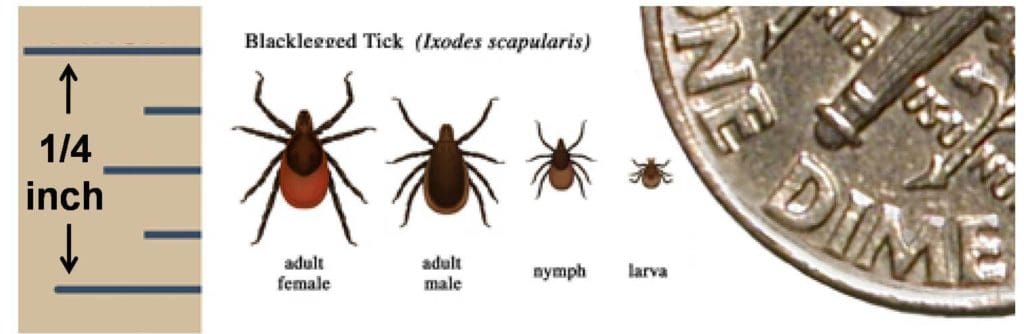 Lyme disease is spread by black-legged ticks commonly known as deer ticks similarly to how
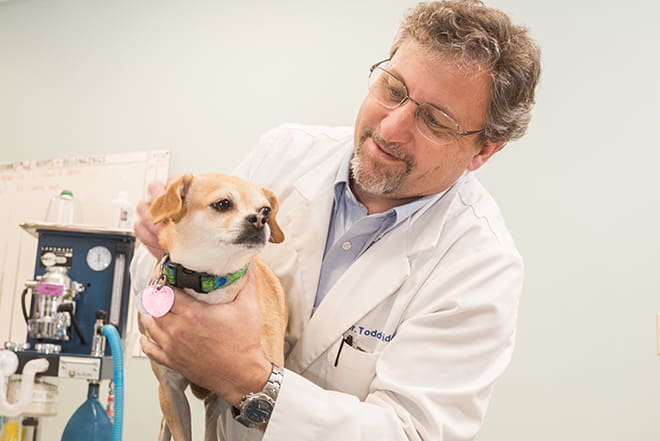 When choosing a vet, you should feel welcome to ask questions of anyone on the team. Receptionists, vet technicians, kennel staff, and the veterinarians are all there for the health of your dog or cat. This means more than diagnosis, treatment, and boarding. It means education for you, the caretaker, and transparency about the practice as a whole.
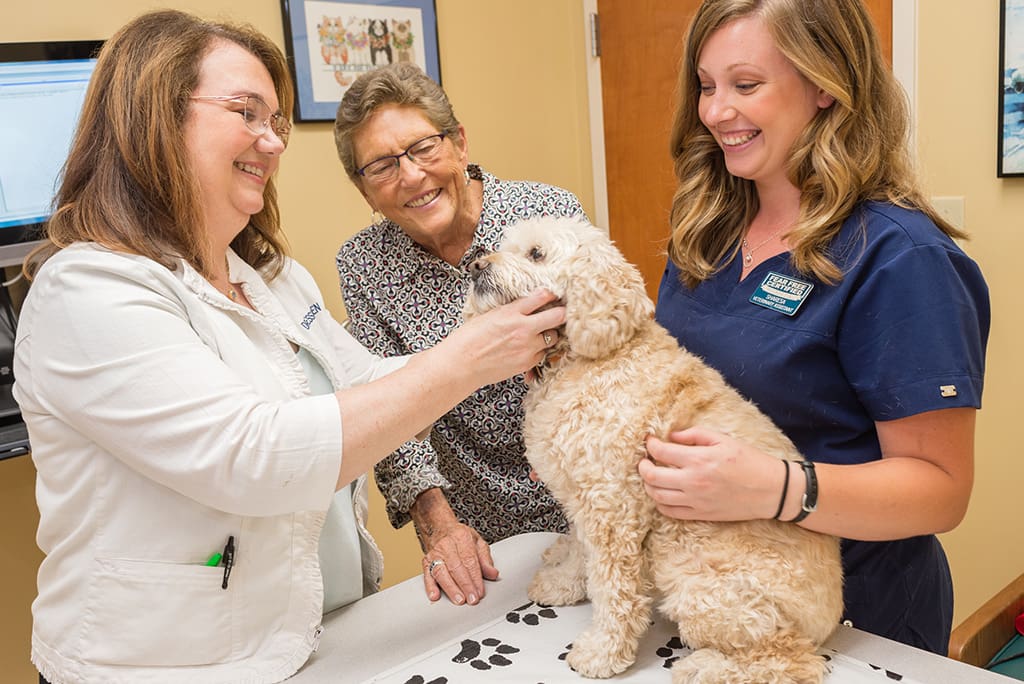 What to Look for at the Animal Hospital
 We get it. It’s easy to not fully realize how underweight or overweight a dog or cat actually is simply because we get used to seeing them a certain way every day. They might be slightly underweight or incredibly obese, but the health problems that can be associated are substantial and sometimes deadly.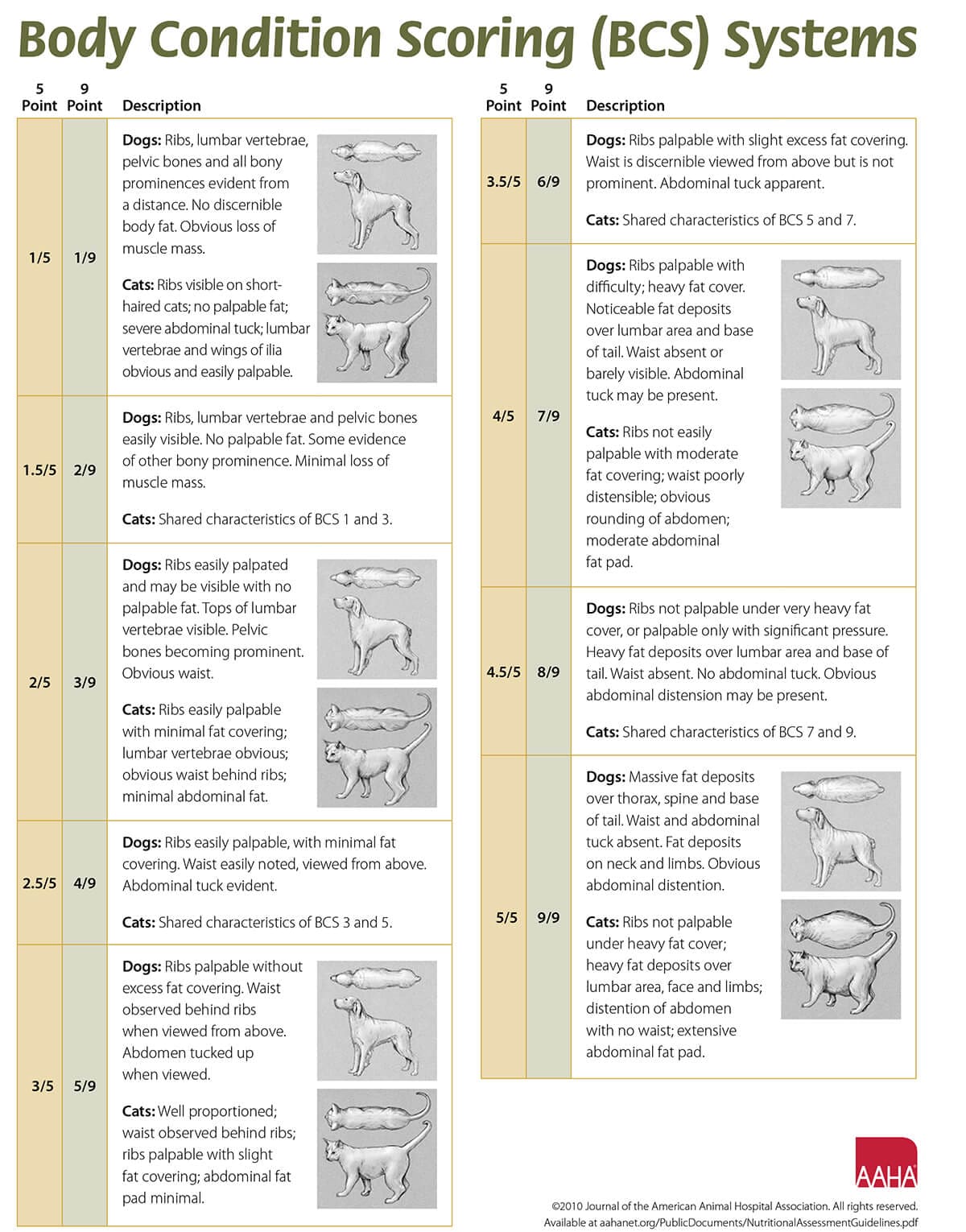
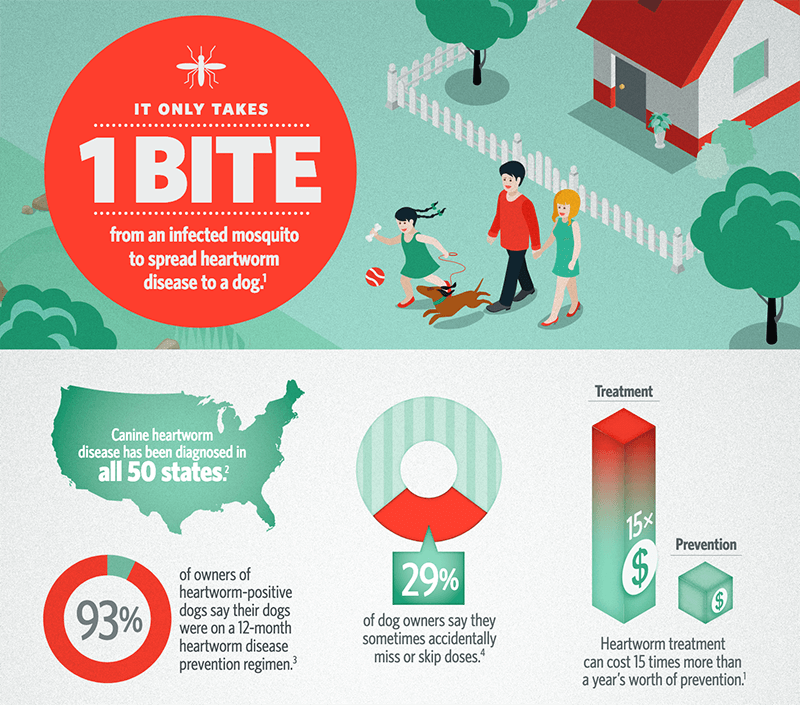 Heartworm prevention is an absolute must for pets. The tough part is sticking to the required monthly schedule for giving it to them. It gets even more fun when you aren’t sure if they actually swallowed the tablet or if whatever your other dog is smacking on in the corner is the rejected tablet in question. Fortunately, dogs and their people have a much easier option: an injectable heartworm prevention that only has to be done twice per year. That’s it.
 One of the reasons that cats often end up in need of emergency care is simply because of a well-intentioned mistake. Many cat owners have guessed that they could use the same flea and tick prevention on their cat as they can on their small dog. Unless a product has been specifically formulated for both species, this just is not true.